

Vintage 50 Series
Celebrating Bill Fuller’s milestone 50th vintage in Oregon, our 2023 Vintage 50 Pinot Noir & Chardonnay are crafted by Bill from his favorite blocks at Tualatin Estate Vineyard using his traditional techniques.
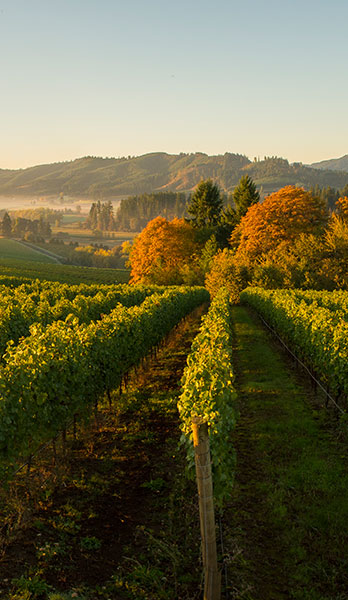
Tualatin Estate Vineyard
Forest Grove, Oregon
Tualatin Hills AVA
Tualatin Estate Vineyard, established in 1973, is one of the oldest and most respected vineyard sites in Oregon. Wine grapes from this 171-acre vineyard have produced world-renowned wines for more than 45 years. Tualatin is the only vineyard to have won the Best of Show for both the red and white categories at the London International Wine Competition in the same year. Tualatin’s Pinot Noir captured the Governor’s Trophy, Oregon’s most prestigious wine award, two years consecutively in 1994 and 1995. This is a feat unduplicated by any Oregon winery. Tualatin Estate Vineyard merged with Willamette Valley Vineyards in 1997.
The name “Tualatin” originates from the local indigenous people and means “gentle and easy flowing,” referring to the Tualatin River that meanders toward its confluence with the Willamette River. The site is located in the coastal rain shadows near Forest Grove, Oregon. It is planted with Pinot Noir, Chardonnay, Riesling, Gewürztraminer, Muscat and Pinot Blanc. Our most recent plantings reflect the site’s affinity to ripening Pinot Noir, with forty-five new acres planted to seven different French clones, all grafted onto phylloxera-resistant rootstock. The new plantings are spaced at twice the plant density of the original vineyard to improve ripening potential by limiting the crop per plant. This will yield wines that are more consistent from year to year and more structurally complex due to the clonal diversity.
The unique Laurelwood soil profile at Tualatin has also contributed to the wines’ complexity. The top twenty-four inches is a distinct layer of well-drained silt loam deposited from a volcanic eruption of Mt. Hood nearly 10,000 years ago. This feature allows any excess topsoil moisture to drain away from the vine’s feeding roots. The top layer is also riddled with deposits of unique, iron concretions called “pisolites,” which are caused by the weathering of the minerals. Some say “pisolites” add more rose-petal aromas to wines produced from this soil. Below the topsoil layer is deep jory clay, which has a high water-holding capacity to sustain the vine during drought conditions.